

- May 18, 2026
- Jeff Weaver
The Most Common PPE Compliance Mistakes (and Why They Keep Happening)
Most organizations do not ignore PPE requirements.
In fact, many invest heavily in equipment, training, and safety culture. Workers are often wearing what they are supposed to, and on the surface, everything looks compliant.
And yet, during inspections or after incidents, gaps still appear. Why?
Because PPE compliance is not failing at the surface level. It is failing underneath it.
Recent updates from WorkSafeBC highlight a simple truth. Compliance today is less about what you have, and more about how well your system holds up under scrutiny.
Mistake #1: Treating PPE as a One-Time Decision
One of the most common issues is the assumption that once PPE is selected, the job is done. But workplaces change.

New equipment is introduced. Processes evolve. Hazards shift, sometimes gradually and sometimes overnight.
When PPE decisions are not revisited, they quickly become outdated. What was once appropriate can quietly become insufficient.
This is especially true in environments where work conditions vary day to day.
Mistake #2: Relying on “What We’ve Always Used”
There is a strong tendency in many workplaces to stick with what is familiar.
If a certain type of helmet, glove, or respirator has worked in the past, it is easy to assume it will continue to work.
But standards evolve, and so do expectations.
What regulators are increasingly looking for is not consistency, but justification. If your PPE choices are based on habit rather than assessment, that becomes a vulnerability.
Mistake #3: Having Equipment Without a Program
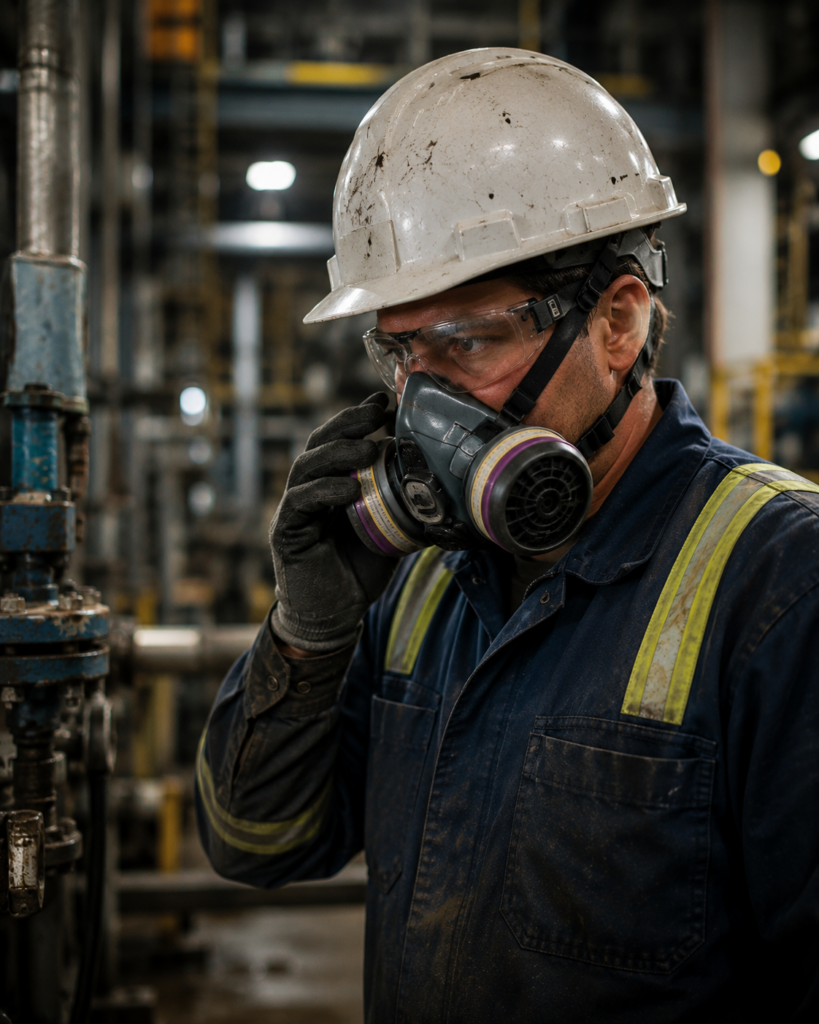
This is especially common with respiratory protection.
Providing respirators without a structured program might feel like a proactive step, but under current expectations, it is incomplete.
Without fit testing, maintenance procedures, and documented training, the equipment itself does not meet compliance requirements.
This is where many organizations get caught off guard. They have made the investment, but not in the system that makes it valid.
Mistake #4: Documentation That Doesn’t Tell the Full Story
Most organizations have some level of documentation.
Training records exist. Hazard assessments may have been completed at some point. Inspections might be happening informally.
The issue is rarely a complete absence of documentation. It is that the documentation does not connect.
It does not clearly show:
- How hazards were identified
- How PPE was selected in response
- How that PPE is maintained over time
Without that narrative, documentation loses its value.
Mistake #5: Inconsistent Enforcement
Even strong PPE programs can break down at the supervisory level.

Rules may exist, but if they are not enforced consistently, workers begin to interpret them as flexible. Over time, that erodes the integrity of the entire system.
Consistency is what turns a policy into a practice.
Without it, even well-designed programs can fail.
Mistake #6: Overlooking Equipment Condition
It is easy to focus on whether PPE is being worn and overlook whether it is still effective.
Worn-out straps, damaged shells, and expired filters are often subtle issues, but they can significantly reduce protection.
More importantly, they signal a lack of oversight.
Regular inspection and maintenance are not just about function. They are about demonstrating control over the system.
Mistake #7: Gaps on Multi-Employer Worksites
On shared worksites, PPE responsibility can become blurred.
Each contractor may have their own standards, their own equipment, and their own assumptions. Without coordination, those differences create gaps.
And hazards do not respect organizational boundaries.
This is one of the most challenging areas of compliance, and one of the most important to get right.

Why These Mistakes Keep Happening
What ties all of these issues together is a single pattern.
PPE is still being treated as equipment, rather than as a system.
When that happens, decisions are not revisited, documentation becomes fragmented, and enforcement becomes inconsistent. Small gaps turn into larger risks over time.
The Shift That Solves It
The organizations that are getting ahead of this are making one key shift.
They are building PPE systems, not just supplying PPE.
That means continuous hazard assessment, clear selection criteria, structured programs, strong documentation, and consistent enforcement.
When those elements are in place, compliance becomes much easier to maintain, and much easier to prove.
Final Thought
Most PPE failures do not happen because organizations do not care.
They happen because expectations have changed, and the approach has not caught up yet.
Understanding that shift is the first step.
Building systems around it is what closes the gap.